Published · Serving Hoboken and Hudson County, NJ
Basement dehumidifier installation in Hoboken, NJ controls moisture at the source before it causes mold, wood rot, or damage to stored items. A whole-basement dehumidifier keeps relative humidity below 50 percent — the threshold above which mold can grow. Unlike box-store portable units, whole-basement systems drain automatically through a condensate line and are sized for the full cubic footage of the space.
How Whole-Basement Dehumidifiers Work
A whole-basement unit mounts on the wall or sits near the sump pit and draws basement air through a refrigerated coil. Moisture condenses on the coil and drains through a condensate line — to a floor drain, the sump pit, or outside the foundation — without any manual emptying. The dried air returns to the basement.
Most units run on a humidistat set to your target relative humidity level, typically 45 to 50 percent. When humidity rises above the set point, the unit turns on automatically. A digital readout shows the current RH level so you can confirm it's working.
When a Dehumidifier Is the Right Fix
Install a whole-basement dehumidifier when:
- Your basement smells musty or feels damp but walls show no active water seepage
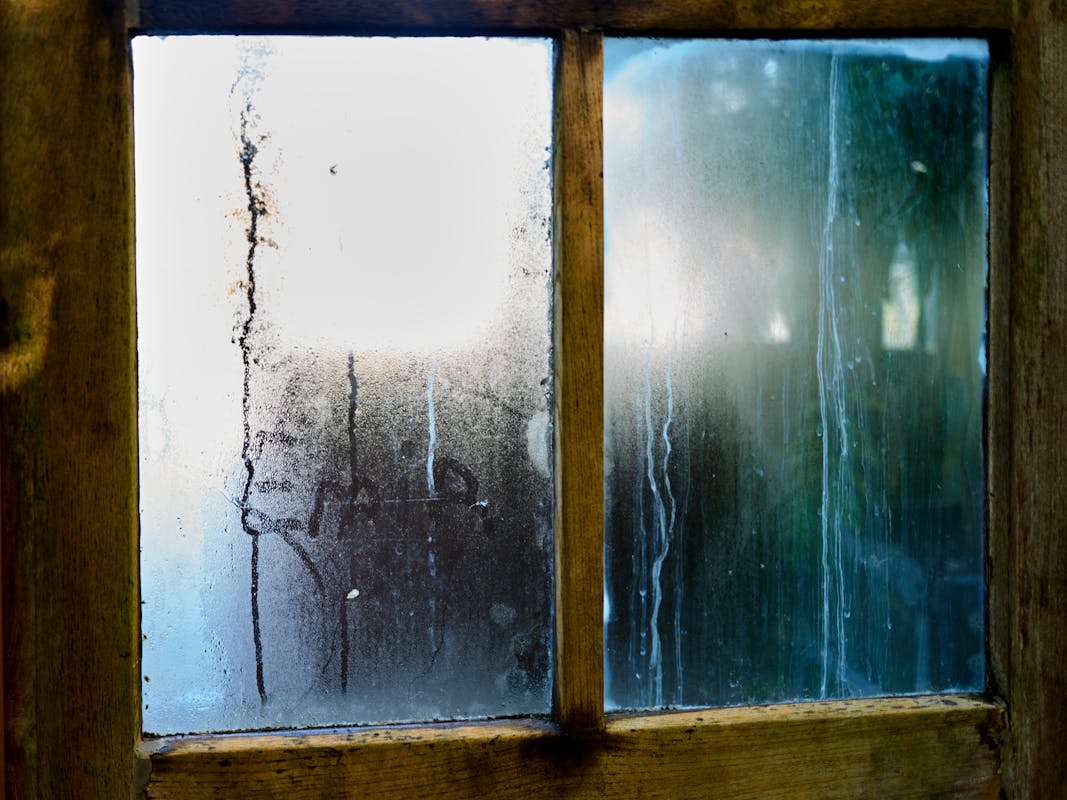
- Condensation forms on cold water pipes, steel columns, or windows in summer
- Stored wood furniture, cardboard boxes, or clothing show moisture damage
- Mold is growing on walls or floor joists in a basement that doesn't flood
- Your portable unit runs constantly and still doesn't control humidity
When a Dehumidifier Is Not the Fix
A dehumidifier does not stop water from entering your basement. If your basement has active water intrusion — water seeping through cracks, entering along the floor edge after rain, or pooling after storms — a dehumidifier will run constantly and accomplish little. Waterproofing must come first.
Some Hoboken basements need both: waterproofing to stop liquid water entry and a dehumidifier to control the residual humidity that persists even after the active leak is sealed. We'll tell you which you actually need, or whether you need both.
Sizing and Cost
The right unit depends on your basement's square footage, ceiling height, and current moisture load. A basement with residual humidity after waterproofing requires a smaller unit than one that has never been waterproofed and takes in moisture from multiple sources. We size to your conditions rather than installing the smallest unit that fits — an undersized dehumidifier runs constantly and fails early, just like an undersized sump pump.

Frequently Asked Questions
Can I just run a portable dehumidifier from a hardware store instead?
You can, but portable units have meaningful limitations. They need to be emptied daily in a humid basement, are not sized for a full basement, and typically cannot maintain the humidity levels a whole-basement system can. If you have an occasional problem, a portable unit is fine. If humidity is a recurring seasonal issue, a whole-basement system is more reliable and less maintenance.
How often does a whole-basement dehumidifier need maintenance?
Annual filter cleaning and a check of the condensate line is typically all that's needed. The coil should be inspected every one to two years. Whole-basement units are built for continuous operation, unlike portable units designed for occasional use.
Will a dehumidifier fix my mold problem?
It will prevent new mold from growing once humidity stays below 50 percent. Existing mold on walls, joists, or stored items needs to be cleaned and removed separately — a dehumidifier alone won't eliminate active mold colonies, but it will stop them from spreading and prevent new growth.
At what humidity level should I set my basement dehumidifier?
Set the humidistat to 45 to 50 percent relative humidity. Below 50 percent, mold cannot establish and grow. Below 40 percent, you may notice static electricity and dry-air effects on stored wood items. The 45 to 50 percent range is the practical target for most Hoboken basements.